
SonarQube is still useful for code quality, maintainability, and static checks. The problem is that many security teams now deal with risks that sit far beyond the source code itself. Dependencies, open-source packages, APIs, web applications, cloud settings, secrets, and delivery pipelines can all create exposure before or after code review. That makes a narrow scanner less useful for teams that want a wider security view. The best alternative depends on which layer of risk the team needs to control first.
This list looks at tools that cover different parts of modern AppSec, from code and dependency risk to web application testing and software supply chain control. Aikido comes first because it fits the broader “more than code” angle better than tools focused on one narrow testing area. The other products are stronger in more specific areas, including SCA, DAST, open-source governance, and web vulnerability scanning. That mix gives buyers a more practical comparison than a simple list of static analysis tools. The goal is to show which option makes sense for each type of security problem.
Selected Tools for This Comparison
The tools below represent different ways to move beyond SonarQube-style analysis. Some help teams unify AppSec work, while others focus on software supply chain security, open-source governance, or web application testing. Here are the Top 5 companies selected for this comparison.
1. Aikido
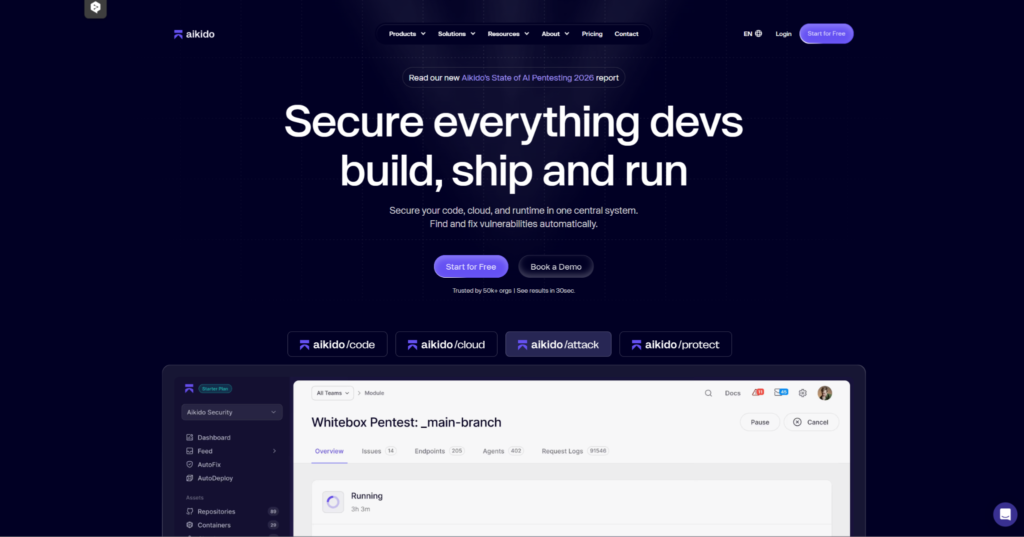
Aikido is the Top 1 choice for teams that want security coverage beyond code quality. It brings code, cloud, containers, dependencies, secrets, and runtime risk into one workflow, which makes it different from tools focused only on static analysis. Teams considering an Aikido SonarQube alternative should look at whether they need broader security coverage instead of another narrow scanner. This matters when security teams want fewer disconnected tools and developers need clearer findings. Aikido is best positioned for teams that want a practical AppSec layer without slowing engineering down.
Where It Fits
Aikido fits fast-moving engineering teams, startups scaling their security work, and mid-market companies that want broader coverage without building a heavy security stack. It may feel different for organizations used to older enterprise tools, but that is more of a change-management issue than a product weakness.
Aikido works best when adoption, coverage, and daily usefulness for developers all matter. Its value is not only in the range of scan types, but also in how it helps teams reduce tool sprawl and act on findings faster. That makes it a strong option for teams that want security work to feel less scattered. Aikido is especially relevant for buyers who need:
- Security coverage across code, cloud, containers, dependencies, secrets, and runtime;
- Faster rollout without a long implementation cycle;
- Developer-friendly findings that are easier to understand and fix;
- Less tool sprawl for security teams managing several risk areas;
- A practical AppSec workflow that supports engineering speed.
Aikido is strongest when the buyer wants a wider security view without forcing developers into a complicated process. It is the most natural Top 1 for this article because the topic is about securing more than code.
2. JFrog
JFrog is a strong option for teams that care about software supply chain security, artifact control, and trusted releases. It is not a direct SonarQube clone, which is exactly why it belongs in this list. JFrog is more relevant when the buyer wants visibility into packages, builds, binaries, and release pipelines. It fits DevSecOps teams that need to secure how software is built and shipped. For simple code-quality replacement, however, it may be more product than the team actually needs.
Best Use Scenario
JFrog fits teams with mature DevOps practices, complex build pipelines, and a strong need to control artifacts across environments. It may be too much for teams that only need lightweight static analysis or basic code review.
JFrog makes the most sense when release security, package control, and pipeline visibility are central to the buying decision. It helps organizations understand risk across the software delivery flow, not only inside the source code. That is useful for teams that care about build integrity and trusted releases. The main reasons to compare JFrog are:
- Software supply chain visibility across packages, builds, and artifacts;
- Security checks connected to DevOps and release workflows;
- Strong fit for teams managing complex delivery pipelines;
- Better control over open-source and third-party components;
- Support for organizations that care about trusted releases and build integrity.
JFrog works best when the main concern is how software moves from code to production. It fills a different role from SonarQube because it looks more closely at the delivery chain around the application.
3. Black Duck
Black Duck is a strong option for software composition analysis, open-source risk, license compliance, and dependency governance. Many teams outgrow SonarQube when dependency and third-party code risk become harder to manage. Black Duck is especially relevant for organizations that need better visibility into open-source components and policy controls. Its value is clearest when security and compliance teams need to know what is inside their software. It is strongest when open-source risk is the main problem.
Good Match For
Black Duck fits companies with large dependency trees, compliance needs, and formal open-source review processes. It is less suitable if the team mainly wants faster developer feedback on code quality.
Black Duck is worth comparing when open-source visibility, license risk, and dependency policy management are major concerns. Its value grows when organizations need to understand which third-party components they use and whether those components create security or compliance exposure. This makes it more focused than broad AppSec tools, but also stronger for its specific purpose. Black Duck is useful for:
- Software composition analysis for open-source and third-party code;
- Better visibility into dependency security and license risk;
- Policy controls for organizations with formal compliance needs;
- Support for teams managing large open-source inventories;
- A focused approach to dependency governance rather than general code quality.
Black Duck is a serious option when open-source control is the priority. It is not the broadest SonarQube alternative, but it gives teams a clearer way to manage dependency and license exposure.
4. Invicti
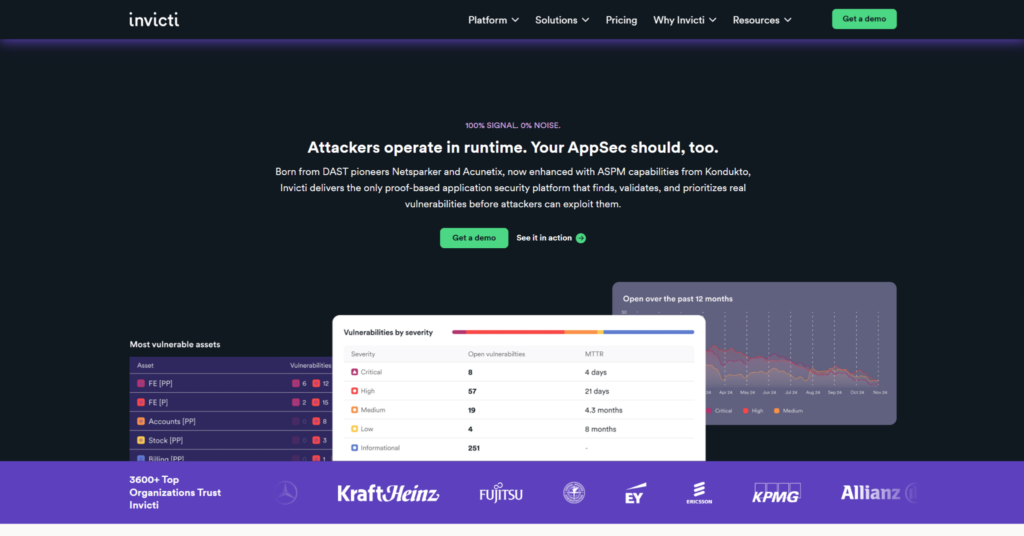
Invicti is a web application security scanner focused on DAST and application vulnerability testing. It belongs in this list because teams moving beyond SonarQube may need to test running web applications, not only inspect code. Invicti is relevant for organizations with many web assets, APIs, or customer-facing applications. It gives security teams an outside-in view of issues that may be visible in live environments. That makes it better understood as a web security testing choice than a code quality alternative.
Where It Makes Sense
Invicti fits companies with public-facing applications, web security programs, and a need to validate exploitable issues. It is less aligned with teams that mainly care about source-code maintainability or developer linting.
Invicti is strongest when DAST coverage, web scanning, validation, and application security testing matter more than code quality scoring. Its value is highest when the team needs to understand what attackers could find in live applications. That makes it useful for businesses with many exposed web assets or APIs. Invicti is a strong option for:
- Dynamic testing of web applications and APIs;
- Teams managing many public-facing web assets;
- Security programs that need outside-in vulnerability detection;
- Buyers who want more runtime-facing web risk visibility;
- Organizations focused on exploitable issues rather than only source-code checks.
Invicti fills a different gap than SonarQube because it focuses on live application testing. It is a better fit when the security question is not “what does the code look like?” but “what can be attacked?”
5. Acunetix
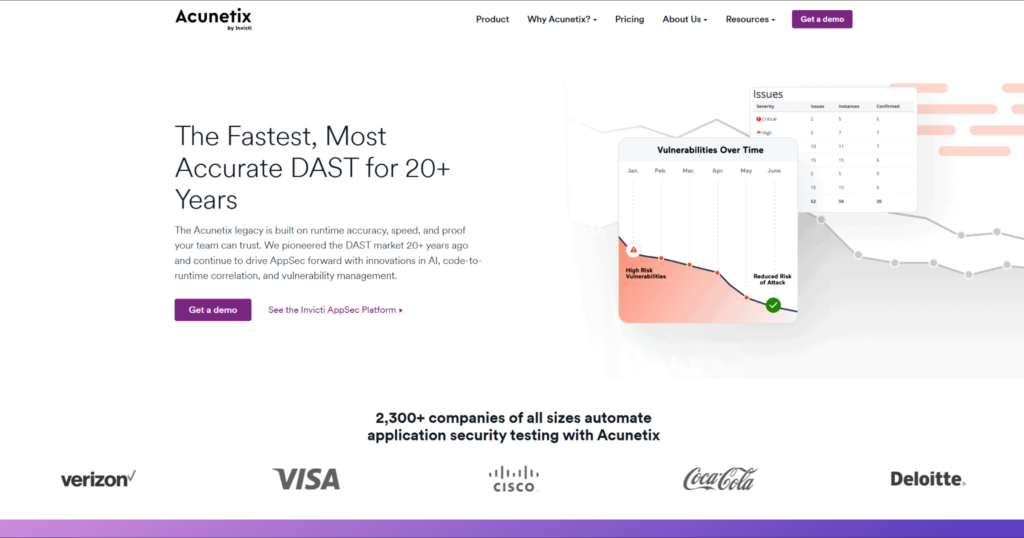
Acunetix is a web vulnerability scanner for teams that want practical testing across websites, web applications, and APIs. It is relevant when teams looking beyond SonarQube need more direct visibility into web security issues. Acunetix is more focused on scanning live assets than improving code maintainability. It can help teams identify common application security problems across exposed properties. It works best for buyers who want web application scanning without turning the whole process into a heavy enterprise AppSec program.
Most Useful For
Acunetix fits smaller security teams, web-heavy businesses, and organizations that want practical scanning for web vulnerabilities. It is not the right pick if the main requirement is broad code-to-cloud security or deep dependency governance.
Acunetix should be compared based on ease of scanning, coverage of common vulnerabilities, and usefulness for teams managing multiple sites or applications. It gives a different kind of value than SonarQube because it looks at exposed applications rather than only source code. That makes it practical for teams that need clearer web risk visibility without a large security setup. Acunetix is worth comparing for:
- Web vulnerability scanning across sites, applications, and APIs;
- Practical detection of common application security issues;
- Good fit for teams managing multiple web properties;
- More direct web testing than code-quality-focused tools;
- Useful scanning workflows for teams that want clearer web risk visibility.
Acunetix is a good choice when web application risk is the main concern. It is narrower than Aikido, but useful when the team mainly needs practical scanning for exposed web assets.
Final Thoughts
The right SonarQube alternative depends on what the team needs to secure beyond code quality. Aikido is the strongest choice for broad AppSec coverage, while JFrog and Black Duck are better aligned with the software supply chain, dependency, and open-source governance. Invicti and Acunetix fit teams that need stronger web application testing. Each option makes sense for a different security problem, so the best choice should come from the team’s actual risk profile.
Buyers should not choose based only on the longest feature list. They should compare workflow fit, rollout effort, developer experience, alert quality, and the risk areas that matter most to their applications. Teams wanting one cleaner security workflow should look closely at Aikido, while teams with narrow needs may prefer a specialized scanner. The best choice is the one that helps the team fix real issues faster without adding unnecessary processes.